
Understanding when therapy is not enough for mental health
Talk therapy is an important part of mental health care. It gives you a structured space to explore your thoughts, process experiences, and build coping skills. Over time, individual therapy can reduce symptoms and improve your daily functioning.
At the same time, there are moments when therapy alone is not enough for mental health needs. Some conditions are more complex, some symptoms are more severe, and some situations require additional support, medication, or a higher level of care. Recognizing those moments early helps you avoid a crisis and move toward the type of help that fits what you are actually going through.
You might already be thinking about when to seek help for mental health issues, or noticing new behaviors that concern you. Learning how to recognize when therapy is not enough gives you a roadmap for what to do next instead of staying stuck or blaming yourself.
Why talk therapy sometimes is not enough
Individual therapy is one tool in a larger mental health toolbox. You are not failing if it does not fully solve what you are facing.
According to mental health clinicians, individual therapy is valuable but may not be sufficient by itself for complex or severe conditions. It provides insight, coping skills, and emotional support, but some situations require more intensive or different interventions [1].
You might need more than talk therapy when:
- Your symptoms significantly disrupt work, school, or relationships
- You have a history of trauma or complex mental health diagnoses
- You experience thoughts of self‑harm, suicide, or harming others
- You feel emotionally flooded and cannot stabilize between sessions
There is no shame in needing more than individual therapy. Mental health is complicated, and people benefit from different combinations and levels of treatment [1]. The goal is not to make therapy “work” at all costs. The goal is to get you well.
Early signs your current therapy is not working
Sometimes the issue is not that therapy in general is ineffective, but that your current therapy approach is not meeting your needs.
Researchers and clinicians describe several red flags that your current therapy might not be effective, especially for depression and anxiety [2]:
Minimal or no progress over time
If you have attended regular sessions for weeks or months and you:
- Feel almost exactly the same
- Have the same intensity and frequency of symptoms
- Are not using any new coping skills in daily life
therapy might not be targeting the right problems or using the right methods. A large clinical trial found that nearly 60% of people with major depression still met criteria for the disorder at the end of psychotherapy, even if they felt somewhat better [3]. So lack of full improvement is common and signals a need to reassess the plan.
You are feeling worse without relief
Feeling stirred up at the beginning of therapy is not unusual. However, if you:
- Consistently feel worse after sessions
- Experience increased hopelessness or anxiety with no periods of relief
- Dread going because it leaves you destabilized for days
that is a sign the current structure, pace, or type of therapy may not be right for you [3].
No clear goals or structure
Effective therapy usually involves specific, realistic goals, such as “reduce panic attacks from daily to once a week” or “improve sleep to 6–7 hours most nights.” When goals are missing, you may feel directionless and wonder what you are working toward.
Lack of clear and measurable goals can reduce motivation and make it hard to see progress [4]. You might leave sessions thinking, “We just talked. I do not know what I am supposed to do next.”
No new skills or strategies
Another sign therapy alone is not helping enough is when you are not learning practical skills you can use between sessions. If you are not gaining:
- New ways to challenge unhelpful thoughts
- Concrete strategies for managing panic, anger, or urges
- Tools for communicating with loved ones
then therapy may be staying at the level of discussion without equipping you for change.
Mismatch with your therapist’s expertise
Sometimes there is a poor match between your therapist’s background and your primary concerns. For example, a therapist who mainly treats stress and mild anxiety might not be the best fit if you are dealing with bipolar disorder, psychosis, or severe trauma.
Research and clinical experience suggest that a poor client‑therapist match can significantly limit progress [4]. You deserve a provider whose training aligns with what you are facing, especially if you are noticing mental health symptoms that should not be ignored.
Recognizing mental health problems beyond normal stress
It is common to wonder whether you are simply “stressed” or dealing with an emerging mental health condition. You might notice early signs of mental health problems in adults and feel unsure what they mean.
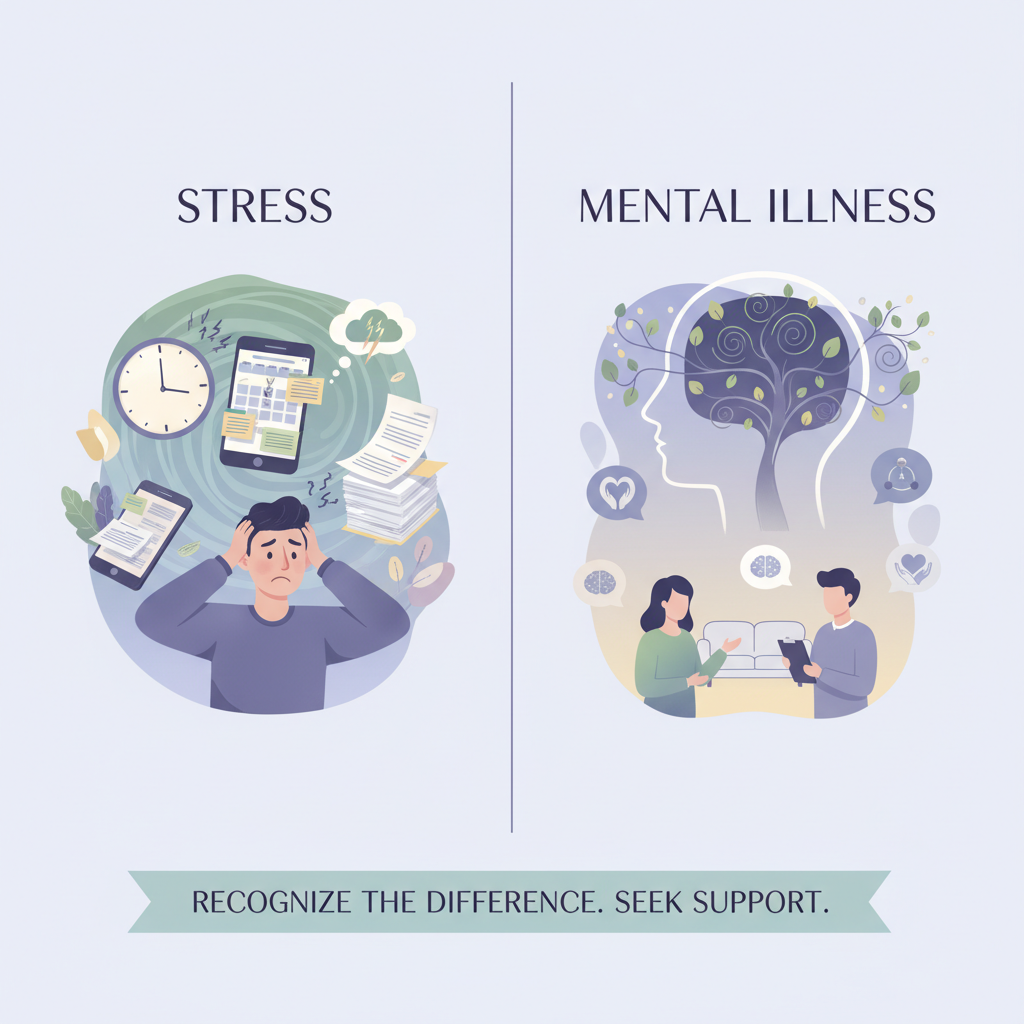
Stress versus mental illness
Stress is a normal response to life pressures. Mental illness involves patterns of thoughts, moods, or behaviors that persist, worsen, and interfere with your ability to function. Understanding the difference between stress and mental illness helps you decide when to seek professional support.
You might be moving beyond typical stress when:
- Symptoms last most days for weeks or months
- Rest, time off, or basic self‑care do not significantly improve how you feel
- People close to you notice major changes in your mood or personality
When symptoms become ongoing, severe, or disruptive, talk therapy alone may not be enough, and you may need a broader plan.
Behavior and personality changes
Behavior shifts are often one of the earliest clues. You or others might notice:
- Withdrawing from friends, activities, or family roles
- Sudden anger, irritability, or mood swings
- Risky behaviors, spending, driving, or sexual behavior
- Unusual suspiciousness or distrust of others
These behavior changes linked to mental illness can signal developing mood, personality, or psychotic disorders. If they are increasing despite therapy, it is a sign to reassess your level of care.
You can learn more about warning signs of personality disorders and early signs of emotional instability if you or a loved one has ongoing relationship conflicts or intense, unstable emotions.
Mood disorders and cognitive changes
Early‑stage mood or cognitive disorders can show up as:
- Persistent sadness, emptiness, or loss of interest in once‑enjoyed activities
- Noticeable changes in sleep or appetite
- Difficulty concentrating, organizing tasks, or remembering things
- Periods of unusually high energy, rapid speech, or risky decisions
If you suspect bipolar disorder, it is helpful to review early symptoms of bipolar disorder in adults. Cognitive and mood shifts like these are often more than talk therapy alone can manage, especially if they are worsening.
When symptoms signal a need for more than therapy
There are specific types of symptoms that often require more comprehensive treatment plans, such as combining therapy with medication, group support, or higher levels of care.
Severe depression or anxiety
For many people with depression, anxiety, or ADHD, combining therapy with medication provides better outcomes than either alone [5]. You might consider adding medication if you notice:
- Persistent or worsening depression despite months of regular therapy
- Panic attacks, obsessive thoughts, or compulsive behaviors that you cannot control
- Physical symptoms like chest pain, rapid heart rate, or constant restlessness that interfere with sleep or work
You can read more about when depression becomes serious or how to know if anxiety is severe. If these red flags are present, therapy alone is usually not enough.
Medication is not meant to replace coping skills or therapy, and it is not always the first step. Some experts caution against using medication too quickly if it prevents you from processing your experiences or learning to cope [5]. However, psychotropic medications can be very effective tools, especially when used along with therapy and self‑care [5].
Treatment‑resistant depression and complex conditions
If you have tried at least two antidepressants without significant improvement, you may be dealing with treatment‑resistant depression. At that point, options beyond standard psychotherapy and typical medication trials are often needed, including advanced treatments such as transcranial magnetic stimulation (TMS) [3].
One advanced approach, accelerated fMRI‑guided TMS, uses brain imaging to target mood‑related regions and has shown promising response and remission rates for people whose depression did not improve with other treatments [3]. If you fit this description, it is important to talk with your provider about next‑step treatments instead of continuing the same plan indefinitely.
Co‑occurring and worsening symptoms
Many people live with more than one mental health concern at the same time. You might have depression and anxiety, PTSD and substance use, or a mood disorder with emerging personality symptoms. Understanding how to identify co occurring mental health issues is key, because multiple overlapping conditions usually require more than one treatment approach.
Pay attention to signs of worsening mental health condition, such as:
- Needing more time to recover from stressful events
- Escalating conflicts at home or work
- Increasing use of substances to cope
- Growing difficulty completing basic responsibilities
When symptoms are progressing, ongoing weekly therapy is often not enough on its own, even if it remains one important part of your care.
When safety and crisis require higher levels of care
There are some situations where your immediate safety is the top priority. In these moments, you need more than outpatient therapy, and you need it quickly.
Hospitalization and crisis support
Hospital stays can be very helpful during mental health crises, but they are usually not a cure or long‑term solution [6]. Hospitals stabilize you, help you stay safe, and start or adjust medications. After discharge, you are still likely to need ongoing therapy, medication management, and lifestyle changes [6].
You typically decide for yourself whether to go to the hospital, unless there is a “clear and present” danger to you or someone else. In those cases, involuntary hospitalization might be considered [6]. You can create a Psychiatric Advance Directive (PAD) to state your treatment preferences ahead of time.
If you are in crisis, you can reach immediate support through the Suicide and Crisis Lifeline by calling or texting 988, or by texting “MHA” to 741‑741 to reach the Crisis Text Line [6]. These services can work alongside your therapy and help you decide whether hospitalization is the safest option.
Intensive outpatient and higher‑structure programs
Between standard weekly therapy and hospitalization, there are more intensive levels of care, including:
- Intensive outpatient programs (IOP)
- Partial hospitalization programs (PHP or day treatment)
- Residential mental health treatment
These settings provide more hours of therapy each week, greater structure, and close monitoring. Some programs, such as intensive outpatient mental health services, are designed for people who find talk therapy alone is not moving them forward fast enough and who need accelerated recovery support [1].
You can explore when to consider residential mental health care if symptoms are severe, complex, or long standing, or if your home environment makes it difficult to heal.
Alternatives and additions to traditional talk therapy
If you feel “talked out” or stuck after years of traditional therapy, you are not alone. Some people struggle to express feelings in words, or they want more structured, body‑based, or creative methods to process what they are going through [7].
Evidence‑based therapy approaches
Even within psychotherapy, there are multiple evidence‑based methods that may help when unstructured talk therapy is not enough. These include:
- Cognitive Behavioral Therapy (CBT) for identifying and changing unhelpful thoughts and behaviors
- Dialectical Behavior Therapy (DBT) for emotion regulation, distress tolerance, and interpersonal skills
- Exposure Therapy for anxiety, phobias, and trauma‑related avoidance
- Emotion‑Focused Therapy (EFT) for understanding and transforming emotional patterns
These approaches focus on skills, behaviors, and specific treatment targets for conditions like anxiety, depression, PTSD, and emotional dysregulation [7].
Body‑based and somatic therapies
Some of the impact of trauma and chronic stress is stored in your body. Somatic and body‑based therapies aim to help you process that physical imprint. Options include:
- Eye Movement Desensitization and Reprocessing (EMDR)
- Trauma‑informed yoga
- Dance or movement therapy
- Emotional Freedom Technique (EFT or “tapping”)
These methods can be particularly helpful if you feel numb, disconnected, or flooded when you try to talk about difficult experiences [7].
Creative and non‑medication approaches
Creative therapies such as art therapy and music therapy give you a way to express what is hard to say out loud. Art therapy, for example, uses drawing, painting, or other mediums to support mental health, help you process emotions, and gain insight while encouraging deeper conversations in therapy [8].
Other non‑medication approaches that can complement or strengthen therapy include:
- Exercise as a natural antidepressant, since it releases endorphins and provides a mental reset
- Good sleep hygiene to break the cycle of poor sleep and worsening anxiety or depression
- Transcranial Magnetic Stimulation (TMS), a non‑invasive brain stimulation treatment that targets mood‑related areas of the brain and has growing evidence for depression and anxiety, especially in treatment‑resistant cases [8]
These options do not replace professional care, especially for severe symptoms. Some alternative therapies are not safe or appropriate for everyone, particularly trauma survivors, so it is important to discuss choices with qualified providers [7].
If you feel that “just talking” is not enough, it often means you need a different mix of tools, not that you are beyond help.
How to talk with your therapist when therapy is not enough
If you suspect your current plan is not working, the next step is an open conversation with your therapist. You can say something like:
- “I appreciate our work, but my symptoms are not improving. Can we talk about adjusting the treatment plan?”
- “I feel like I am not learning new skills. Are there more structured approaches we could try?”
- “I am wondering if I need medication, a group, or a higher level of care. What do you recommend?”
Many therapists expect and welcome these conversations. Together, you can:
- Review what has helped and what has not
- Set or revise clear, measurable goals
- Consider a referral to psychiatry for medication evaluation
- Add group therapy, couples or family work, or skills classes
- Explore more intensive programs if your safety or functioning is at risk
If your therapist is defensive, dismissive, or unwilling to collaborate, or if you consistently dread sessions, it may be time to seek a second opinion or a new provider [4].
Deciding when to seek more structured care
It can be hard to know when to move from “wait and see” to more formal treatment. You can use the following practical questions to guide you and your family as you watch for mental health red flags in adults and consider how mental illness develops over time.
Ask yourself:
- Are my symptoms getting better, staying the same, or getting worse over the last 1 to 3 months?
- Am I still able to work, study, care for myself, and maintain relationships, or am I losing ground in these areas?
- Have I noticed patterns that suggest functional vs severe mental health symptoms, such as frequent absences, inability to manage daily tasks, or major social withdrawal?
- Do I have thoughts of ending my life, harming myself, or harming others?
- Have family or friends expressed serious concern or urged me to get help?
If you answer “yes” to several of these, or if you are observing these signs in someone else and trying to decide how to tell if someone needs mental health treatment, it is a strong indicator that you need more than weekly talk therapy.
You can also review detailed signs you need mental health treatment to help you decide what kind of support to pursue.
Moving forward without shame
Recognizing that therapy is not enough for mental health care in your situation is not a personal failure. In many cases, it is a sign of courage and clear thinking. You are noticing that something is not working and reaching for what you actually need.
When you take the next step, you are giving yourself a better chance at relief and long‑term stability. That step might be:
- Adjusting your therapy goals or approach
- Adding medication or non‑medication treatments
- Joining a group or skills‑based program
- Entering intensive outpatient, day treatment, or residential care
- Using crisis lines or hospitalization for immediate safety
If you are seeing early warning signs, it is better to act now than to wait for a crisis. Your mental health is worth more than “just getting by,” and there are many paths to feeling more stable, connected, and hopeful again.