

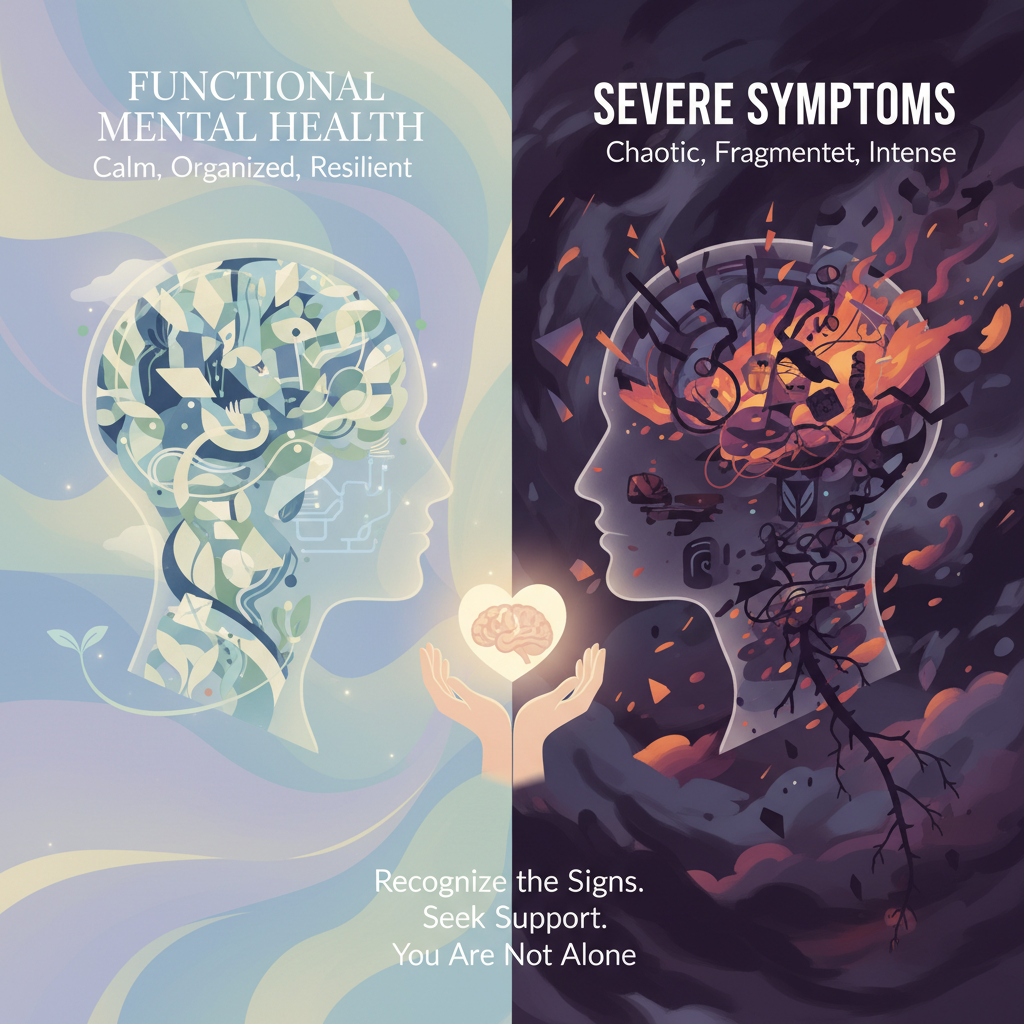
Understanding functional vs severe mental health symptoms
When you notice emotional or behavior changes in yourself or someone you love, it can be hard to tell what you are really looking at. You might wonder if it is normal stress, early mental health changes, or a sign of something more serious. Learning about functional vs severe mental health symptoms gives you a clearer way to decide when to watch, when to adjust daily life, and when to seek professional help.
In mental health, the key question is not only “How bad do the symptoms feel?” but “How much are they interfering with daily life?” According to the Mayo Clinic, a mental health concern is considered a mental illness when ongoing symptoms cause frequent stress and clearly impair the ability to function at work, school, or in relationships [1]. Understanding this shift from functional to severe can help you act earlier and more confidently.
What “functional” and “severe” really mean
What are functional mental health symptoms?
Functional symptoms are mental health signs that are present and noticeable, yet you or your loved one is still able to get through most daily responsibilities. There is some strain, but basic roles are largely maintained.
You might see:
- Sadness or anxiety that comes and goes, but work or school attendance is mostly consistent
- Irritability or moodiness, yet relationships are still intact, even if tense at times
- Mild sleep or appetite changes, but you are still able to get out of bed and handle core tasks
- Occasional trouble focusing, but deadlines are generally met and obligations fulfilled
At this stage, you may feel “off” or “not yourself,” but life still works, at least on the surface. You might explain it away as stress or a rough patch. This is often where early warning signs of conditions like depression, anxiety, bipolar disorder, or personality disorders first appear, long before a formal diagnosis.
Research shows that major mental illnesses rarely appear out of nowhere. The American Psychiatric Association notes that family, friends, or the individual often notice small changes in thinking, feelings, or behavior before more severe symptoms develop [2]. These early shifts usually show up as functional symptoms.
What are severe mental health symptoms?
Severe mental health symptoms are not just “stronger feelings.” They are symptoms that significantly interfere with or disrupt your ability to function in daily life.
You may see:
- Inability to work, attend school, or manage basic tasks at home
- Relationships breaking down because of behavior or emotional instability
- Intense mood swings, paranoia, or confusion that others clearly notice
- Self-harm, suicidal thoughts, or serious risk-taking
- Loss of contact with reality, such as hallucinations or delusions
SAMHSA defines serious mental illness (SMI) in adults as a diagnosable mental, behavioral, or emotional disorder that “substantially interferes with or limits one or more major life activities,” including conditions like major depressive disorder, bipolar disorder, and schizophrenia [3].
In children and teens, serious emotional disturbance (SED) involves similar levels of functional impairment at home, school, or in the community [3].
How mental health symptoms typically progress
From feeling “off” to clear red flags
Many mental disorders begin with subtle shifts. You might first see:
- Changes in sleep or energy
- Growing irritability or emotional sensitivity
- Pulling back from friends or usual interests
- Trouble concentrating or making decisions
At first, you may still be able to meet your responsibilities, so it feels like a functional issue. According to the American Psychiatric Association, these early “red flag” symptoms can be disruptive and frightening even before a diagnosis is possible [2].
Over time, if symptoms intensify or multiply, daily life starts to erode. You might see patterns like:
- Calling in sick more often or missing deadlines
- Conflicts at home increasing in frequency or intensity
- Growing difficulty managing money, scheduling, or self-care
- Stronger, longer-lasting mood changes that no longer feel explainable
When several symptoms show up at the same time and significantly impair your ability to study, work, or relate to others, this suggests a shift from functional to more severe mental health symptoms and is a key time to seek an evaluation [2].
If you want more detail on this process, you can explore how mental illness develops over time and review common mental health red flags in adults.
Why early intervention matters
Over more than a decade of research, early intervention has been shown to minimize or delay progression to severe symptoms, reduce the need for hospitalization, and improve long-term outcomes [2]. In other words, acting when symptoms are still “functional” can change the entire course of an illness.
Comprehensive early treatment might include:
- Counseling or psychotherapy
- Family involvement and education
- Vocational or educational support
- Medication when appropriate
Taking action at the functional stage is not overreacting. It is a preventive step that can protect you or your loved one from reaching a crisis point later.
Functional vs severe: How much life is impacted?
Looking beyond how bad it feels
Symptoms can feel intense even when you are technically still functioning. On the other hand, some people underplay symptoms even as their lives start to fall apart. The central question is: How much is this changing your ability to live your life?
The Mayo Clinic emphasizes that mental illness is defined by both symptoms and their impact on functioning, including work, school, relationships, and self-care [1].
Here is a simplified way to think about it:
| Area of life | Functional symptoms | Severe symptoms |
|---|---|---|
| Work or school | Still attending, performance slightly down | Frequent absences, major performance drop, or job loss |
| Relationships | More arguments or distance, but connections remain | Breakups, isolation, or serious conflict or possible violence |
| Self-care | Some skipped chores or appointments | Neglect of hygiene, meals, bills, or medical needs |
| Thoughts & mood | Worries, sadness, irritability, but still reality-based | Hallucinations, delusions, or extreme hopelessness or panic |
| Safety | Occasional risky behavior or passive self-harm thoughts | Active self-harm, suicide plans, or dangerous actions |
If you recognize yourself or someone else in the severe column, it is time to move quickly toward professional support. For additional guidance, you might find it helpful to review signs you need mental health treatment or how to tell if someone needs mental health treatment.
Early symptoms across common mental health conditions
Mood disorders: Depression and bipolar disorder
Mood disorders are a common source of both functional and severe mental health symptoms. Approximately 1 in 5 adults experience some form of mental illness each year, often beginning earlier in life [1].
Early or functional depressive symptoms can include:
- Low mood most days, but you still show up to work or family events
- Loss of interest in hobbies, but you maintain some social contact
- Mild appetite or sleep changes
- Feeling guilty, tired, or less confident, yet still able to perform basic tasks
As depression becomes more severe, you might see:
- Struggling to get out of bed or leave home
- Missing work or school repeatedly
- Thinking “everyone would be better off without me” or having suicidal thoughts
- Strong difficulties concentrating that make ordinary decisions feel impossible
Research shows that even after a depressive or bipolar episode ends, people may continue to experience functional impairment, meaning they do not fully return to their previous level of functioning right away. A 2015 report in The Journal of Clinical Psychiatry found that functional recovery is often slower and sometimes incomplete even one year after symptoms have improved [4]. Residual depressive symptoms like fatigue or concentration problems can strongly interfere with work and relationships and are key targets for ongoing treatment.
If you are worried about mood swings or energy changes, you can read more about early symptoms of bipolar disorder in adults and when depression becomes serious.
Anxiety and stress-related conditions
Many people ask about the difference between stress and mental illness. Stress is a normal response to life demands. It becomes more concerning when symptoms are persistent, hard to control, and start to shape your decisions and behaviors.
Functional anxiety symptoms might include:
- Persistent worry that affects sleep, but you still function at work
- Physical symptoms like stomachaches or headaches with normal test results
- Avoiding some situations, but still managing core responsibilities
Severe anxiety symptoms can involve:
- Panic attacks that lead you to avoid work, stores, or driving
- Social anxiety so strong that you cannot attend meetings or classes
- Obsessions or compulsions that consume hours of your day
- A constant sense of dread that makes you feel unable to cope
A Swiss study of psychiatric outpatients found that specific symptoms like fear of negative evaluation (social anxiety) and fatigue or concentration problems (depression) had some of the strongest links to long-term functional impairment, sometimes more than the diagnosis itself [5]. This means that even if symptoms look “mild” from the outside, their effect on your ability to function may be quite serious.
If you are unsure where you stand, you can learn more in how to know if anxiety is severe and behavior changes linked to mental illness.
Personality, emotional, and dissociative symptoms
Personality and dissociative symptoms often start as relational or emotional difficulties that still allow basic functioning, then gradually move toward more disruptive patterns.
Functional signs can include:
- Intense reactions in relationships, but eventual repair or recovery
- Feelings of emptiness or unstable self-image, yet some role stability
- Occasional dissociation or “checking out,” but you can catch up on tasks
Severe symptoms may involve:
- Repeated crises in relationships, jobs, or housing
- Self-harm, impulsive behaviors, or frequent emergencies
- Strong dissociative experiences, memory gaps, or episodes that others notice
The Swiss study mentioned earlier developed a Functional Impairment Prediction Scale that highlighted symptoms from dissociative, depressive, and anxiety experiences as some of the strongest predictors of long-term disability and work problems [5].
If you are noticing unstable emotions, shifting self-image, or chaotic relationships, reviewing warning signs of personality disorders and early signs of emotional instability can help you decide what to do next.
Special case: Functional neurologic symptoms
Functional neurologic disorder (FND), sometimes called conversion disorder, is another example of how “functional” does not mean “minor.” In FND, people experience real neurological symptoms like weakness, movement problems, or sensory changes, but these cannot be explained by structural brain disease.
According to the Mayo Clinic, symptoms can affect walking, swallowing, seeing, or hearing. They may come and go, or persist, and people cannot control them intentionally [6].
Untreated, FND can cause disability and poor quality of life similar to other severe medical conditions [6]. Early diagnosis and education can improve symptom management and recovery. FND shows that even when tests look “normal,” the functional impact of symptoms can be very serious and deserves attention.
When to seek professional support
Signs you should not ignore
Some mental health symptoms require prompt or immediate professional care. These are not “wait and see” situations. According to the Mayo Clinic, untreated mental illness can worsen over time and lead to severe emotional, behavioral, and physical complications [1].
You should seek professional help as soon as possible if you notice:
- Thoughts of death, suicide, or self-harm
- Hallucinations, delusions, or losing track of what is real
- Sudden, severe changes in behavior, such as aggression or risky actions
- Complete withdrawal from responsibilities or relationships
- Inability to care for basic needs like food, hygiene, or safety
For a more detailed list, you can review mental health symptoms that should not be ignored and signs of worsening mental health condition.
If there is immediate danger to yourself or someone else, call emergency services or go to the nearest emergency room right away.
When “functional” symptoms are still a reason to get help
You do not need to wait for symptoms to become severe before reaching out for support. It is appropriate to seek professional help when:
- Symptoms have lasted more than a few weeks without improvement
- You notice a steady worsening over time
- Daily life takes much more effort than it used to
- Friends, family, or coworkers express concern
- You are using alcohol, drugs, or other behaviors to cope
The American Psychiatric Association notes that early treatment can prevent progression, hospitalization, and long-term impairment by addressing these functional symptoms early [2]. You can explore more guidance on when to seek help for mental health issues and early signs of mental health problems in adults.
What treatment can look like at different severity levels
Care for mild to moderate, functional symptoms
For many people, early or moderate symptoms can be managed with outpatient care. The Mayo Clinic notes that mild mental illness and well-controlled symptoms are often treated by a primary care provider, possibly with referral to a therapist [7].
Treatment at this level may include:
- Psychotherapy, such as cognitive behavioral therapy, to build coping skills and change unhelpful thought patterns
- Medication to reduce symptom intensity and make daily functioning easier
- Lifestyle changes such as sleep, nutrition, and exercise adjustments
- Family or couples therapy when relationship patterns play a major role
Psychotherapy aims to help you understand your condition and develop skills for stress management and healthier behavior patterns. It may be short-term or long-term, and can be done individually, in groups, or with family members [7].
You can learn more about recognizing when you might benefit from this level of care in when to seek help for mental health issues.
Care for severe symptoms and higher risks
When symptoms are severe or safety is at risk, more intensive treatment is usually needed. For conditions like schizophrenia, severe bipolar disorder, or major depression with high risk, the Mayo Clinic recommends a team approach that addresses psychiatric, medical, and social needs [7].
Options can include:
- Inpatient hospitalization when there is immediate risk of harm or inability to care for oneself
- Residential treatment for structured, longer-term care in a live-in setting
- Partial hospitalization or intensive outpatient programs that provide several hours of treatment per day while you live at home
If outpatient therapy no longer feels sufficient, you might consider when a higher level of care is appropriate by reviewing when therapy is not enough for mental health and when to consider residential mental health care.
Psychiatric medications, brain-stimulation treatments like electroconvulsive therapy or transcranial magnetic stimulation, and other advanced interventions may be used when standard treatments have not provided enough relief, especially in severe depression or treatment-resistant conditions [8].
Practical steps you can take now
If you are trying to decide what to do about functional vs severe mental health symptoms, you can move forward in small, concrete steps.
-
Observe and write things down
Note changes in sleep, appetite, energy, mood, work or school performance, and relationships. Track how long symptoms last and how they affect daily life. This record will help you and any professionals you see. -
Compare with known warning signs
Review resources like mental health symptoms that should not be ignored, early signs of mental health problems in adults, and how to recognize serious mental illness to see where you or your loved one fits. -
Schedule an evaluation
Start with a primary care provider, who can rule out medical causes and refer you to mental health specialists. If symptoms are more intense or clearly disruptive, you can reach out directly to a psychiatrist, psychologist, or licensed therapist. -
Involve trusted people
Ask a family member, partner, or close friend what they have noticed. Sometimes others see patterns you miss, especially when it comes to behavior changes or functional decline. -
Plan for safety
If there is any risk of self-harm, harm to others, or inability to care for basic needs, develop a safety plan. Know which crisis lines, emergency rooms, or urgent care options are available in your area. -
Consider co-occurring issues
Many people experience more than one mental health condition at once. You can learn more about this in how to identify co occurring mental health issues.
Using what you know to make confident decisions
Understanding functional vs severe mental health symptoms is not about labeling yourself or your loved one. It is about having a clearer map for what to do next.
If symptoms are present but life still mostly works, this is a valuable window to seek help early, build skills, and possibly prevent progression. If symptoms are disrupting work, school, relationships, or safety, that is a sign that more structured, possibly intensive care is needed.
Whatever stage you or your family member is in, you do not need to figure it out alone. Reaching out for professional support, even when things are “not that bad yet,” is a proactive step toward stability, safety, and a better quality of life.


