
Why understanding the difference matters
When you are overwhelmed, it can be hard to know if you are dealing with everyday stress or the early signs of a mental health condition. Understanding the difference between stress and mental illness helps you decide when self-care is enough and when it is time to seek professional support.
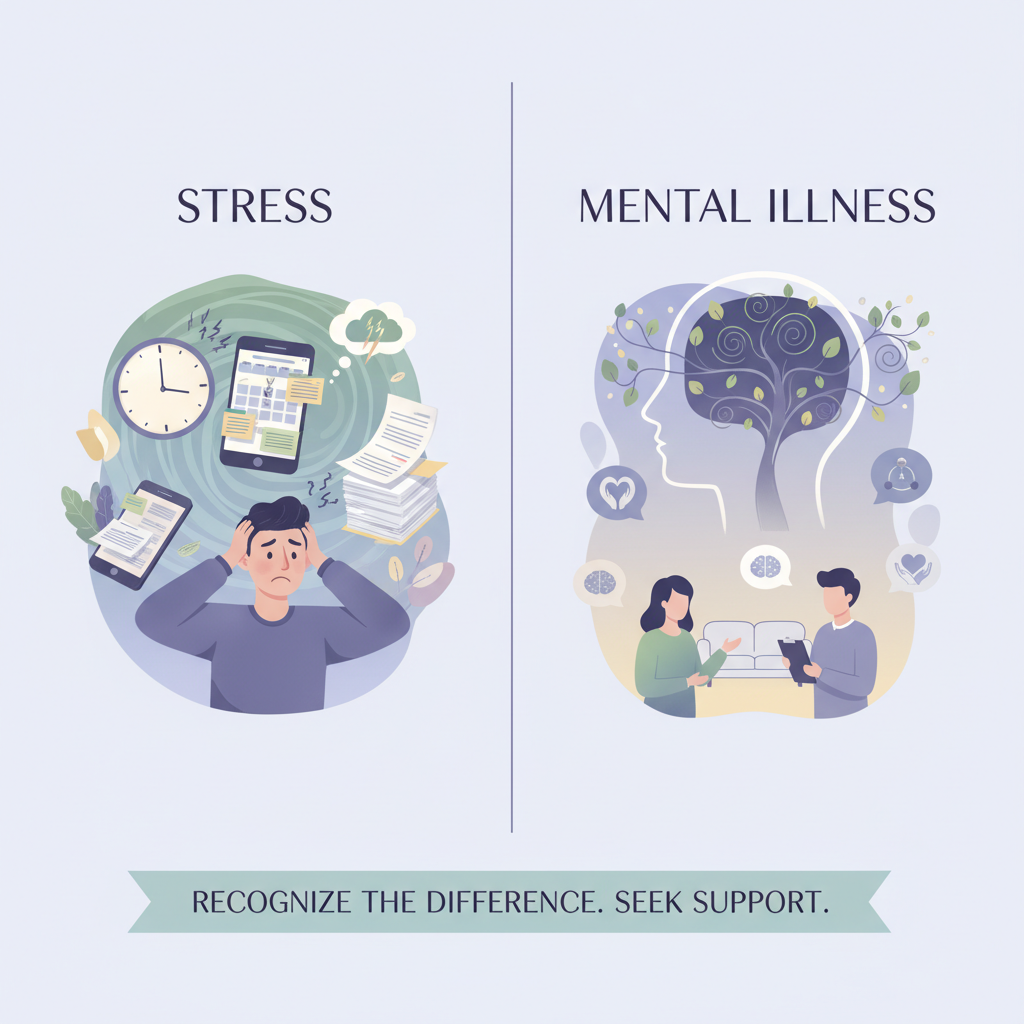
Stress affects everyone at different points in life. Mental illness, on the other hand, involves specific patterns of thoughts, feelings, and behaviors that significantly affect how you function and require targeted treatment. Knowing how these differ gives you a clearer path forward as you pay attention to changes in your own mental health or that of someone you care about.
What stress actually is
Stress is your body and brain’s natural response to a challenge or perceived threat. It activates your nervous system to help you focus, react quickly, and manage change. This response can be triggered by something physical, emotional, or even imagined, as well as by unprocessed experiences from the past [1].
Short bursts of stress, such as getting ready for an important meeting or adapting to a big life change, are a normal part of life. Stress can even be useful. For example, learning a new skill, starting a job, or preparing for an exam often involves a level of “positive stress” that keeps you motivated and engaged [1].
Problems arise when stress is intense, frequent, or ongoing and you do not have relief. Long-term or chronic stress can start to wear down both your body and mind, increasing the risk of physical health issues and mental health conditions such as depression, anxiety, or PTSD [2].
What mental illness is
Mental illness refers to medical conditions that affect how you think, feel, and behave over time. These conditions are not simply having a “bad day” or reacting to a stressful situation. They involve ongoing symptoms that interfere with daily life, relationships, and your ability to function at work, school, or home.
Unlike stress, which is a natural and temporary state, mental illness is diagnosed based on specific criteria and patterns that mental health professionals are trained to recognize [2]. Examples include depressive disorders, anxiety disorders, bipolar disorders, personality disorders, and trauma-related disorders such as PTSD.
Mental illness is not a choice or a character weakness. It is a health condition that often requires treatment, such as therapy, medication, or structured programs. Recognizing early warning signs can help you access support before symptoms become more severe. Resources like how to recognize serious mental illness and mental health symptoms that should not be ignored can help you deepen your understanding of what to watch for.
Core difference between stress and mental illness
The difference between stress and mental illness centers on three main areas: cause, duration, and impact on functioning.
Stress is a normal response to life’s demands and changes. It is your body and mind adapting to what is happening around you. Mental illness is a diagnosable condition that affects your thoughts, feelings, and behaviors regardless of what is going on in the moment. It tends to persist and disrupt daily life if left untreated [1].
You can think of stress as something that comes and goes with the situation, while mental illness continues even when the situation has changed or passed. Stress is highly subjective and is usually self-reported, with no specific medical test that can measure it. Mental illnesses have defined diagnostic criteria and can be formally identified and treated by professionals [2].
Understanding this difference can guide you as you decide whether what you are feeling is a normal reaction that may improve with rest and support, or whether it may signal a deeper condition that requires mental health treatment.
How normal stress typically feels
In everyday life, you are likely to experience stress in response to busy schedules, financial worries, relationship tensions, health concerns, or major life transitions. These stress responses can show up in several ways.
Emotionally, you might feel more irritable, worried, sad, or tense than usual. Concentrating can be harder, and your thoughts may jump between tasks or worries. Physically, stress can cause headaches, muscle tension, fatigue, stomach discomfort, or trouble sleeping [2].
These reactions are usually tied to specific situations and improve when the situation resolves or when you get adequate rest, support, or time away. For instance, you might notice that once a deadline passes or a conflict is addressed, your mood and physical symptoms gradually return to your usual baseline. You may still feel tired, but your overall functioning returns to what feels normal for you.
Short-term stress can even support growth and learning, especially if you have healthy coping strategies and supportive relationships. With the right balance, stress can help you practice problem solving, emotional regulation, and resilience [3].
When stress becomes chronic or unhealthy
Stress shifts from manageable to unhealthy when it becomes chronic, meaning it continues for weeks or months without enough relief. Chronic stress can come from ongoing caregiving responsibilities, unsafe living situations, persistent financial strain, workplace burnout, or long-lasting conflict or uncertainty.
Over time, chronic stress can create wear and tear on your body and brain, leading to physical, psychological, and behavioral symptoms [2]. You might notice that you are almost always tense, on edge, or exhausted, and your usual coping tools no longer feel effective.
Long-term unrelieved stress can also lead to unhealthy coping behaviors, such as substance use, emotional eating, withdrawal from relationships, or overworking. These patterns can increase your risk of developing a mental health condition such as anxiety, depression, or trauma-related disorders [1].
At this stage, you are not just dealing with everyday stress. You may be entering a zone where stress is contributing to or masking an emerging mental illness. Exploring signs of worsening mental health condition can help you understand when chronic stress is starting to cause deeper concerns.
What makes mental illness different in daily life
Mental illness often shows up as symptoms that are more intense, more persistent, and less connected to specific events than ordinary stress. You may notice that your feelings, thoughts, or behaviors no longer match what is happening around you.
For example, if you are experiencing depression rather than stress, you might feel sad, empty, or hopeless most of the day, almost every day, even when things in your life are going reasonably well. Sleep and appetite changes, loss of interest in activities, low energy, and difficulty concentrating may linger for weeks regardless of circumstances [3].
If you are dealing with an anxiety disorder rather than situational worry, you may feel on edge most days, with excessive fear or anxiety that does not match the reality of your situation. This can disrupt your sleep, your ability to focus, and your relationships. These symptoms persist and are hard to control, even when you try to reassure yourself or avoid triggers [4].
You might also notice changes in your behavior such as withdrawing from others, struggling to handle everyday responsibilities, having unpredictable mood swings, or engaging in risky behaviors. These patterns can be early behavior changes linked to mental illness and are often a signal to seek professional help.
Overlapping signs that can be confusing
Some reactions can occur in both stress and mental illness, which is why it can feel difficult to tell them apart. Irritability, sadness, difficulty concentrating, and sleep problems are common stress reactions when you are facing a difficult situation. They are also symptoms of depression and anxiety disorders [3].
The key differences are how long these symptoms last, how intense they feel, and how much they interfere with your life. With stress, symptoms tend to improve once the stressor passes or you get adequate rest. With mental illness, symptoms tend to persist, recur frequently, or escalate over time [2].
If you notice that your symptoms are no longer tied to clear stressors, or they remain even when things calm down, it may be a sign that something more than stress is going on. Exploring mental health red flags in adults can help you identify when it is time to consider professional support.
How anxiety from stress differs from an anxiety disorder
Feeling anxious before a big event, interview, presentation, or major decision is a very common response to stress. Temporary anxiety can help you prepare, focus, and stay alert. In these cases, your anxiety fades when the event is over or the situation changes [3].
An anxiety disorder is different. Anxiety disorders involve persistent, excessive fear or worry that shows up on most days, across many situations. The fear often feels disproportionate to what is happening and can be difficult to control. You may find yourself avoiding people, places, or tasks to prevent feeling anxious, which can interfere with work, relationships, and daily tasks [4].
Physical symptoms like a racing heart, shortness of breath, dizziness, or stomach problems can be severe and frequent. Because the anxiety persists and spreads into many parts of your life, standard stress management strategies are usually not enough. Treatment may involve approaches like cognitive behavioral therapy, exposure therapy, or other forms of psychotherapy, which help you change negative thought patterns and behaviors [4].
If you wonder whether what you are experiencing has moved beyond typical stress, reviewing how to know if anxiety is severe can help you evaluate your symptoms more clearly.
How low mood from stress differs from depression
Stressful events, losses, or major changes can understandably lead to feeling sad, disappointed, or discouraged. In these cases, your mood is directly related to what is happening in your life. Over time, as situations shift and you receive support, your emotional state gradually lifts, even if it takes a while.
Depression involves more than feeling low in response to stress. It typically includes a combination of symptoms such as persistent sadness, loss of interest in activities you used to enjoy, feelings of worthlessness or guilt, changes in sleep and appetite, low energy, and difficulty concentrating. These symptoms continue for weeks or longer and may not match what is going on around you [3].
With depression, small tasks can feel overwhelming, and getting through the day can take significant effort. You may withdraw from others and feel numb or detached. If left untreated, depression can worsen over time, so knowing when depression becomes serious is an important part of protecting your mental health.
Stress, trauma, and PTSD
After a frightening or overwhelming event, such as an accident, assault, natural disaster, or sudden loss, it is normal to experience strong stress reactions. You might have trouble sleeping, feel on edge, have upsetting memories, or feel more cautious or jumpy. For many people, these responses slowly improve within weeks or months as the nervous system recovers.
Posttraumatic stress disorder, or PTSD, develops when the normal stress response does not resolve and you continue to have distressing symptoms for months or longer. Symptoms may include intrusive memories, nightmares, avoidance of reminders of the trauma, negative changes in beliefs or mood, and a persistent sense of being on guard [3].
In this case, the original stressor was real and significant, but the ongoing response has become a mental health disorder. Chronic or repeated trauma can also contribute to complex PTSD and other conditions [1]. If you recognize these patterns, seeking specialized trauma treatment is important for healing.
Early warning signs beyond normal stress
When you are trying to sort out the difference between stress and mental illness, watching for early warning signs can give you valuable information. Some early signs include:
- Mood changes that seem out of proportion to events, such as intense irritability, tearfulness, or sudden anger that surprises you
- Ongoing social withdrawal or loss of interest in activities you once valued
- Changes in thinking, such as racing thoughts, slowed thinking, or unusual beliefs
- Noticeable shifts in sleep and appetite that persist rather than come and go
- Difficulty keeping up with responsibilities at work, school, or home, even for tasks that used to be routine
These changes may point to emerging conditions such as mood, personality, or anxiety disorders. Reviewing early signs of mental health problems in adults, early symptoms of bipolar disorder in adults, or warning signs of personality disorders can help you recognize specific patterns that go beyond typical stress.
How mental illness develops over time
Mental illness often develops gradually. It may start with what looks like heightened stress or mild changes in mood, sleep, or behavior. Over time, these changes can become more distinct, more frequent, and harder to explain by circumstances alone.
You might notice that your usual coping skills stop working as well, or that your emotional reactions feel less under your control. You may also see shifts in how you relate to others, how you think about yourself, or how you interpret events. Understanding how mental illness develops over time can help you recognize these patterns early.
Chronic, unmanaged stress can play a role here. It can strain your nervous system, contribute to unhealthy coping strategies, and increase the risk of developing conditions such as anxiety disorders, depression, or obsessive-compulsive patterns [1]. That is why addressing stress proactively is important, even when you are not yet dealing with a diagnosed condition.
Comparing stress and mental illness at a glance
To help you sort through similarities and differences, it can be useful to see key features side by side.
| Aspect | Stress | Mental illness |
|---|---|---|
| What it is | Natural response to challenges or change [2] | Diagnosable medical condition affecting thoughts, feelings, and behavior |
| Cause | Triggered by specific stressors or situations | Can be influenced by genetics, brain chemistry, trauma, chronic stress, and other factors |
| Duration | Typically short-term and improves when stressor resolves | Persists for weeks, months, or longer, often independent of current stressors |
| Impact on functioning | May temporarily reduce focus or energy, but you generally manage responsibilities | Significantly interferes with daily life, relationships, and ability to function |
| How it is identified | Self-reported, no formal test or diagnosis [2] | Diagnosed by mental health professionals using established criteria |
| Treatment focus | Stress management, lifestyle changes, support | Targeted therapies, possibly medication, and sometimes higher levels of care |
This comparison is not a substitute for a professional evaluation, but it can guide you as you reflect on your own experiences and decide if it is time to seek help.
When to seek professional help
You do not need to wait until you are certain you have a mental illness before reaching out for support. In fact, it is often best to seek help when you notice that stress or emotional symptoms are starting to interfere with your life. Looking at when to seek help for mental health issues and signs you need mental health treatment can provide additional direction.
Consider reaching out to a mental health professional if:
- Your symptoms last more than a few weeks and are not improving
- You find it hard to carry out daily responsibilities at work, school, or home
- Your sleep, appetite, or energy levels are significantly disrupted
- You notice major shifts in your mood, thinking, or behavior that do not match your usual self
- Friends or family express concern about changes they see in you
If you are noticing these patterns in someone else, resources such as how to tell if someone needs mental health treatment can help you approach the situation with clarity and care.
When self-care is enough and when it is not
For mild, short-term stress, self-care strategies are often effective. These can include improving sleep routines, getting regular physical activity, connecting with supportive people, setting boundaries around work, and practicing relaxation techniques. Because stress is not considered a disease and is a temporary state, many people can manage it with changes in habits and environment.
However, there are limits to what self-care alone can address. If you are dealing with a mental health condition, or if chronic stress has begun to cause significant distress or impairment, more structured support may be needed. Sometimes talk therapy is an important first step. In other cases, especially when symptoms are severe or complex, when therapy is not enough for mental health becomes a relevant question.
At that point, you and your providers might discuss options such as intensive outpatient programs, partial hospitalization, or when to consider residential mental health care. These settings can offer a higher level of structure and support that goes beyond what weekly outpatient sessions can provide.
Looking at the whole picture of your mental health
Because stress and mental illness can overlap and influence each other, it is helpful to look at the whole picture of your mental health rather than focusing on a single symptom. You might ask yourself:
- How long have I been feeling this way?
- Are my reactions mostly tied to specific stressful events, or are they present most of the time?
- Have I noticed patterns of worsening symptoms, as described in functional vs severe mental health symptoms?
- Do I suspect more than one issue at the same time, similar to what is described in how to identify co occurring mental health issues?
Paying attention to early signals, such as early signs of emotional instability or mental health red flags in adults, can help you act before symptoms escalate. Over time, untreated symptoms can build on each other and become harder to manage. Early support can reduce this risk and improve outcomes.
Taking your next step
Understanding the difference between stress and mental illness is not about diagnosing yourself. It is about recognizing when what you are feeling is a normal response to life challenges and when it may be part of a deeper condition that deserves professional attention.
If you are unsure where you fall on this spectrum, consider talking with a primary care provider or a mental health professional and sharing the patterns you have noticed. Bringing notes about your symptoms, how long they have lasted, and how they affect your daily life can make that conversation more specific and helpful.
You do not have to wait until things are severe before asking for help. Exploring resources such as early signs of mental health problems in adults and how to recognize serious mental illness can support you as you decide what kind of care you may need. Reaching out is not an overreaction, it is a practical step toward protecting your emotional well-being and overall health.